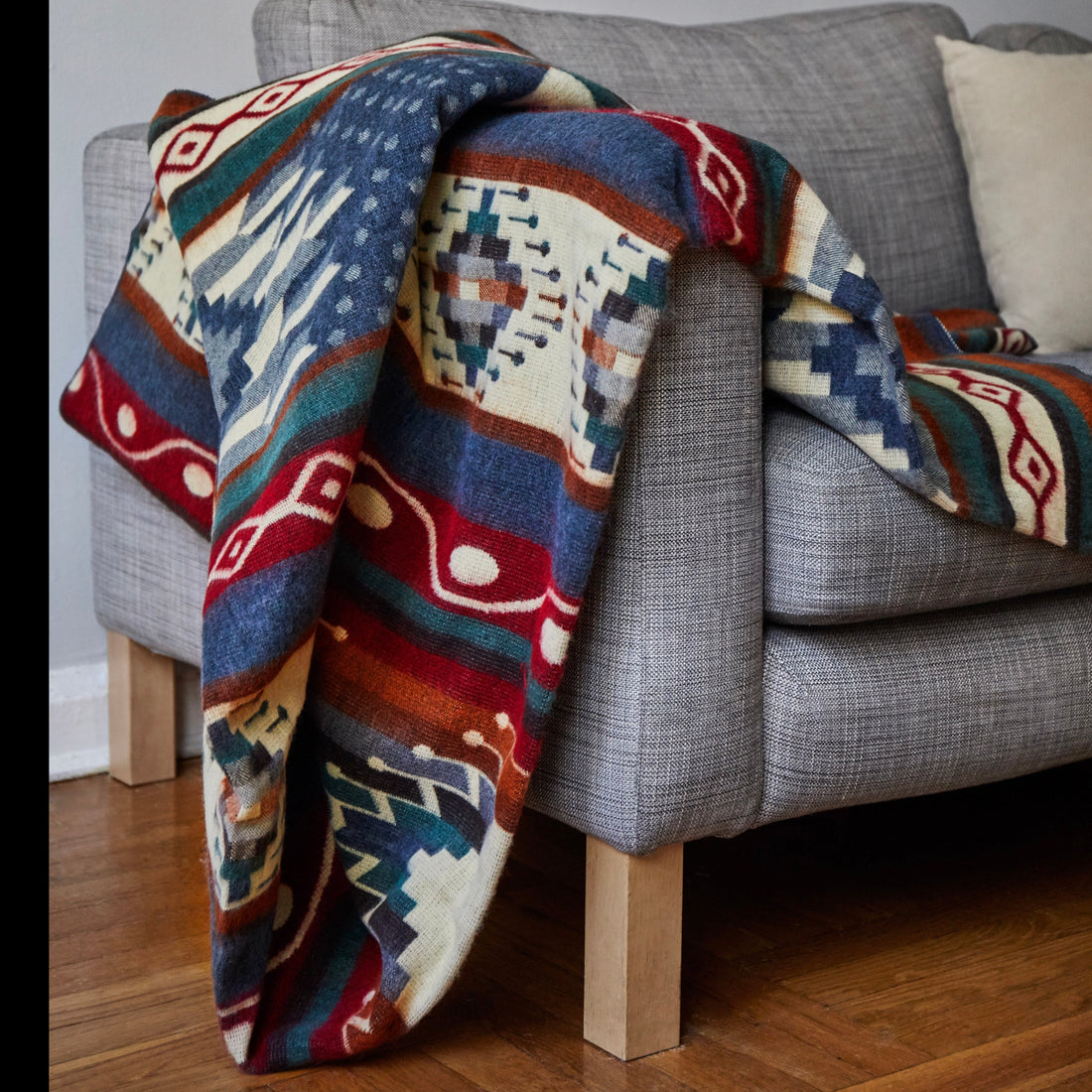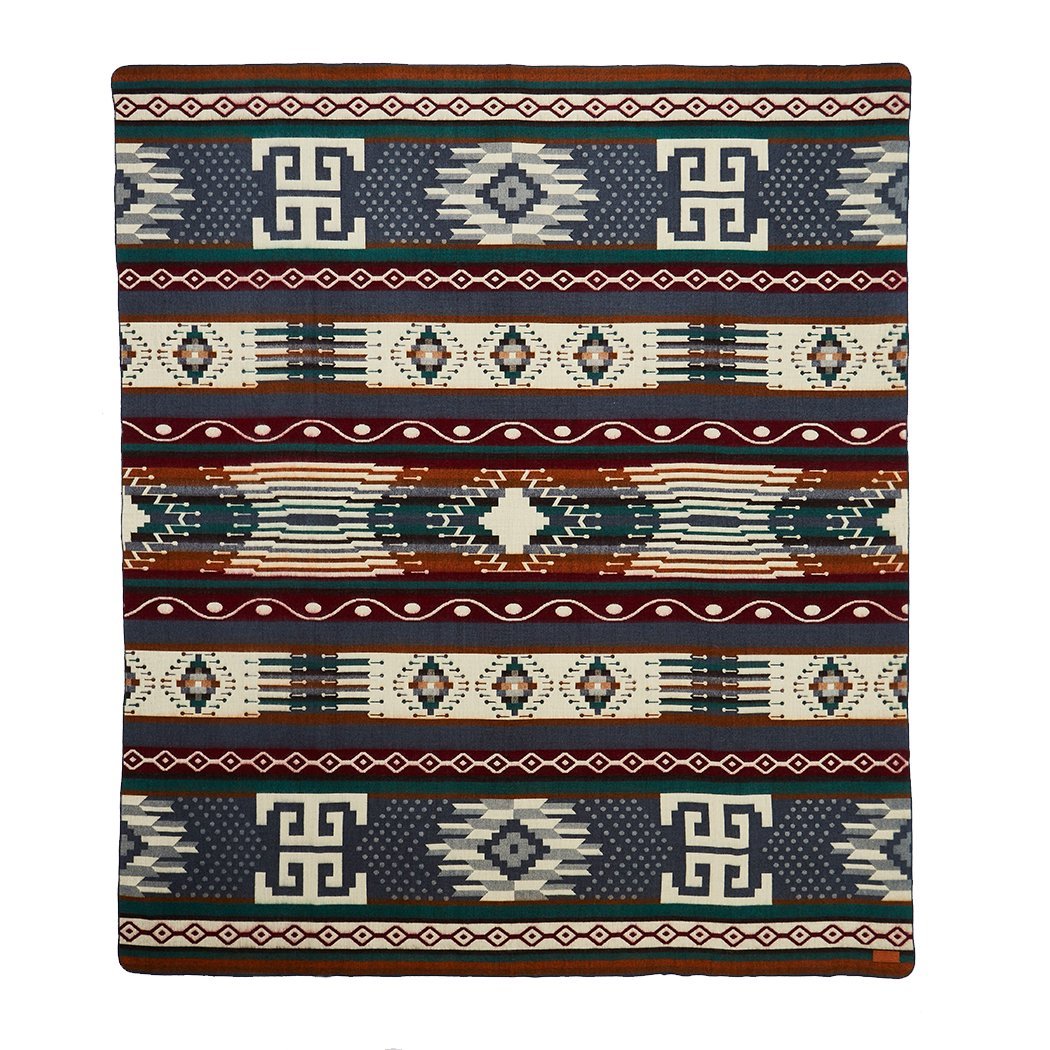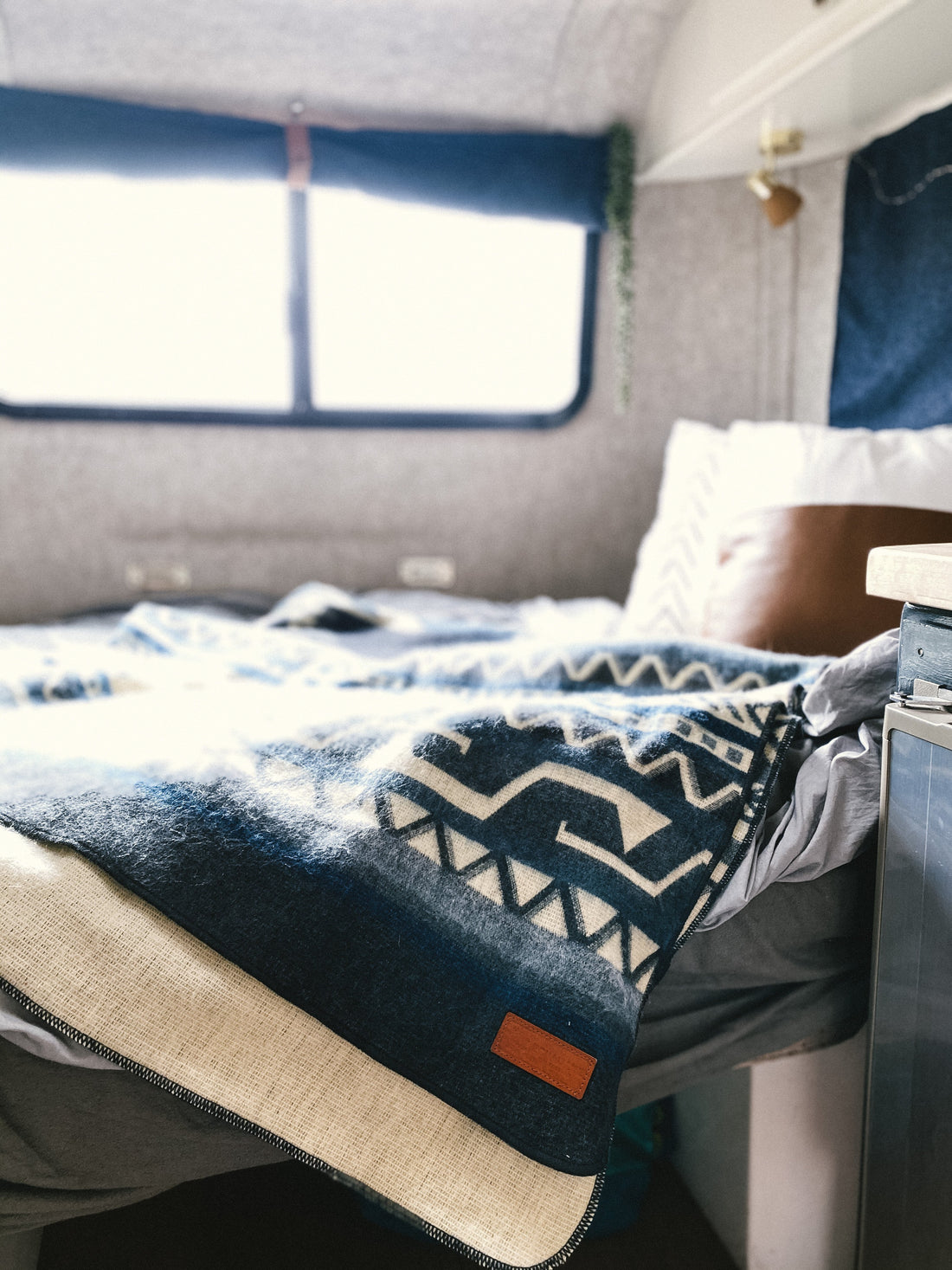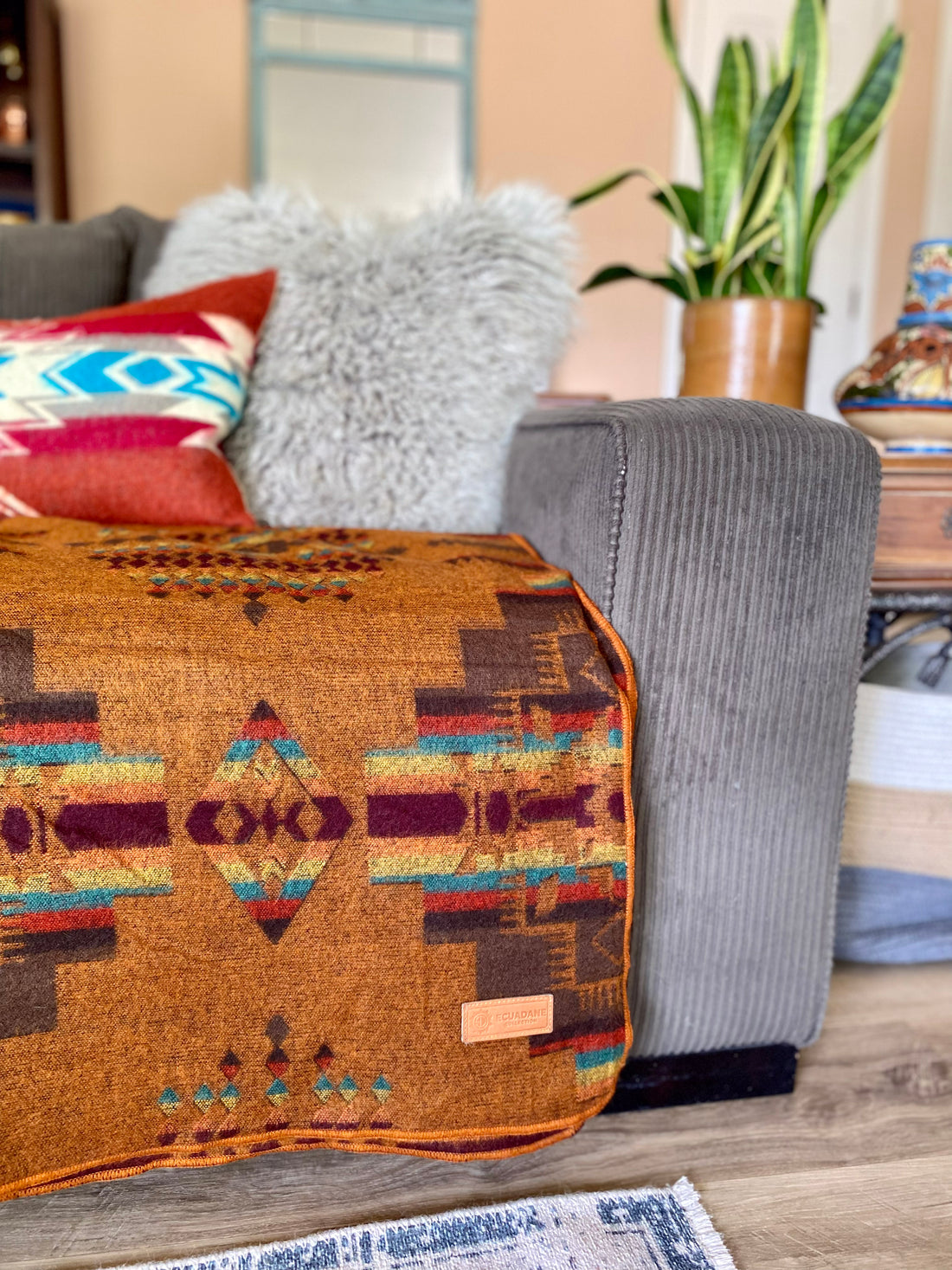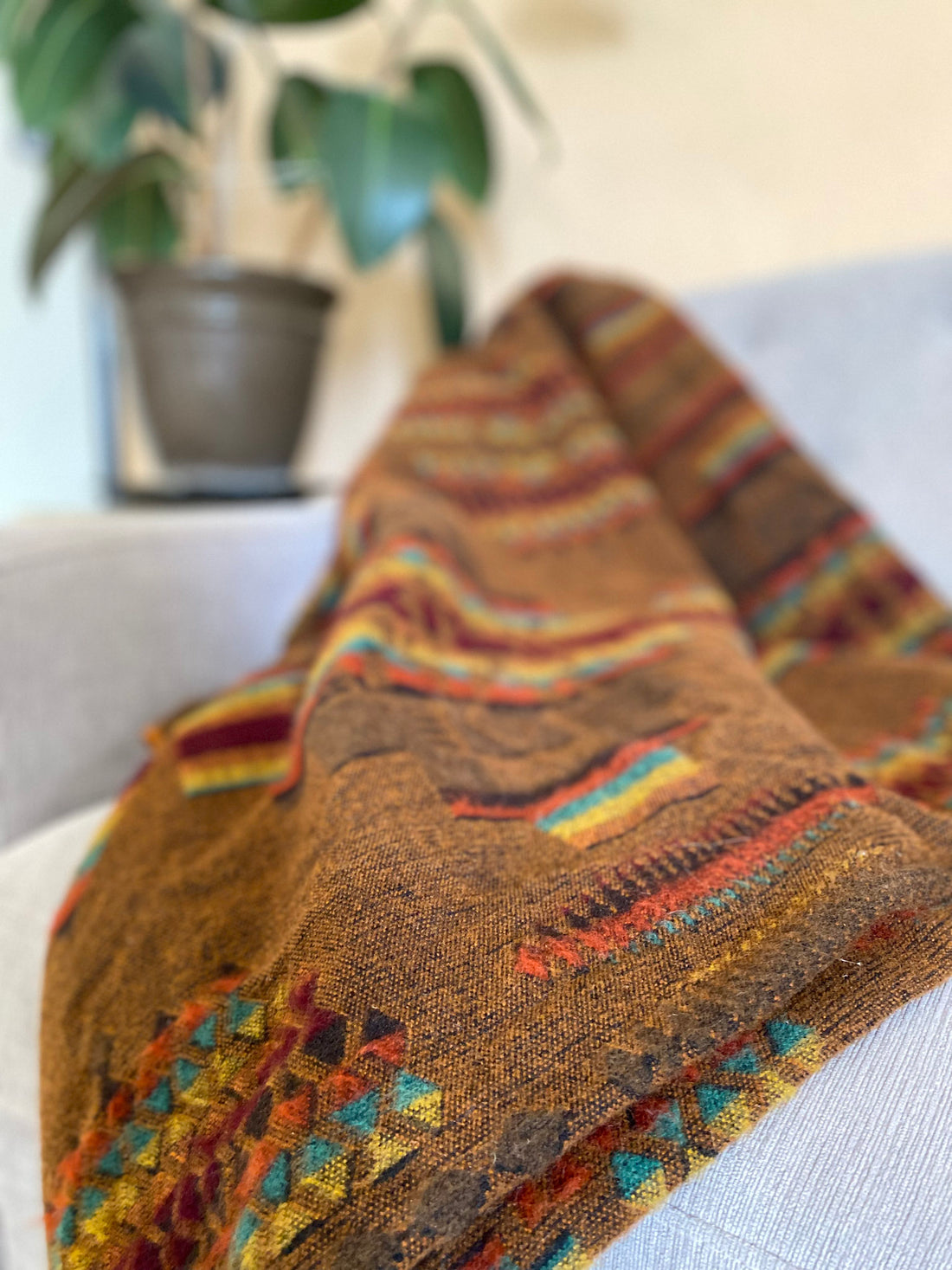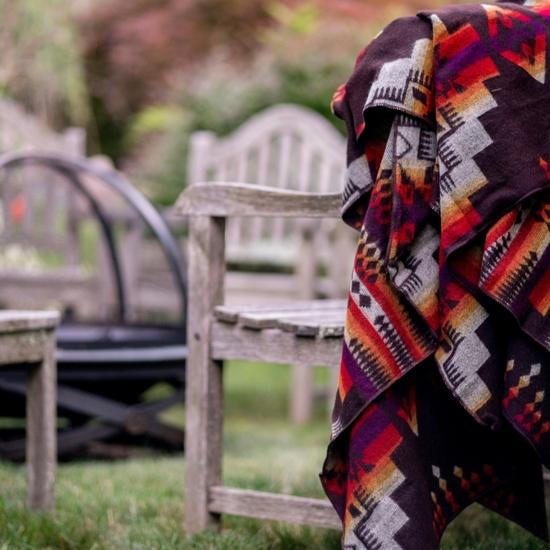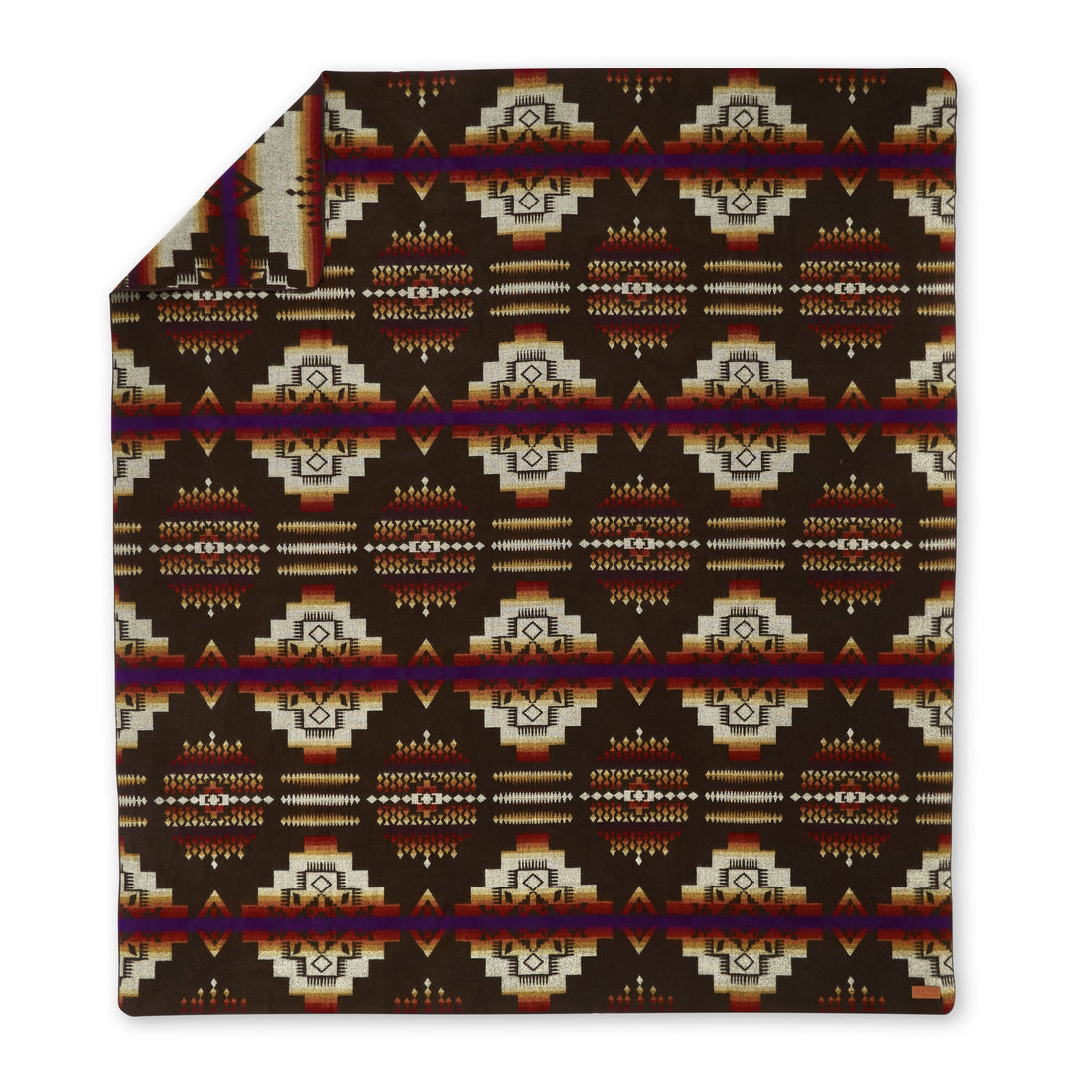
Aztec Area Rugs: Guide to Heritage, Style & Quality

Aztec Area Rugs: Guide to Heritage, Style & Quality


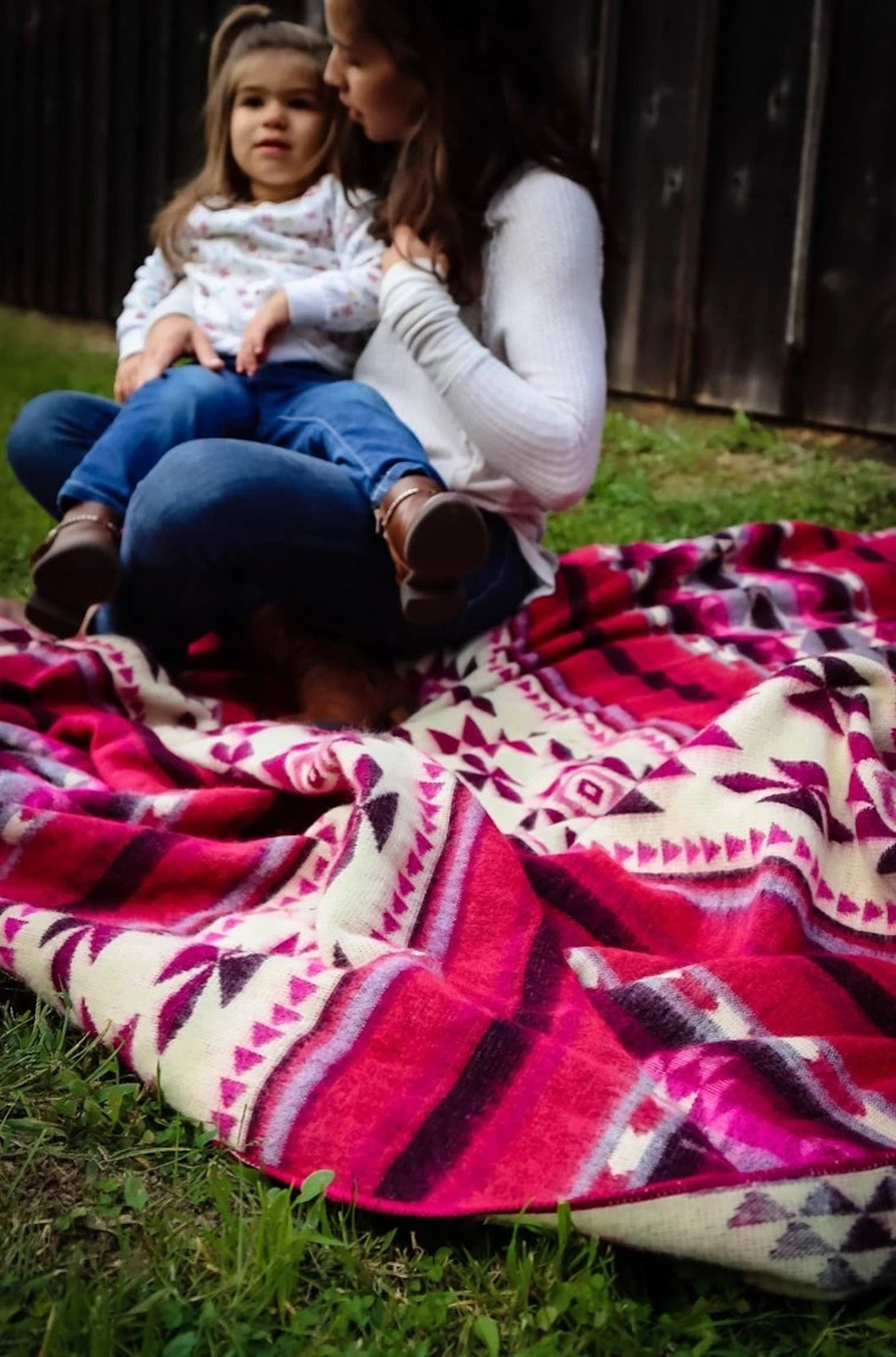
I grew up around textiles that weren't treated as accessories. In the Andes, a woven piece carried memory, labor, and pride long before it ever touched a chair, a bed, or a floor.

That's why I've always had a hard time looking at mass-market pattern rugs as if they're all the same. Some are made to live with you for years. Others are made for a trend cycle, then for the closet, the garage, or the landfill.

Aztec Area Rugs

More Than a Rug, A Story in Every Thread

I still remember watching woven cloth move through family homes in the Andes. It was never treated like filler for an empty corner. A good textile marked a milestone, carried the work of a maker, and stayed in use long enough to gather its own history.

That perspective shapes how I view so-called Aztec area rugs. The retail label is broad, often careless, and usually detached from the authentic traditions that gave geometric weaving its power in the first place. What matters is not whether a product page uses a familiar keyword. What matters is whether the rug was made with material integrity, structural discipline, and respect for the cultures that turned pattern into meaning.
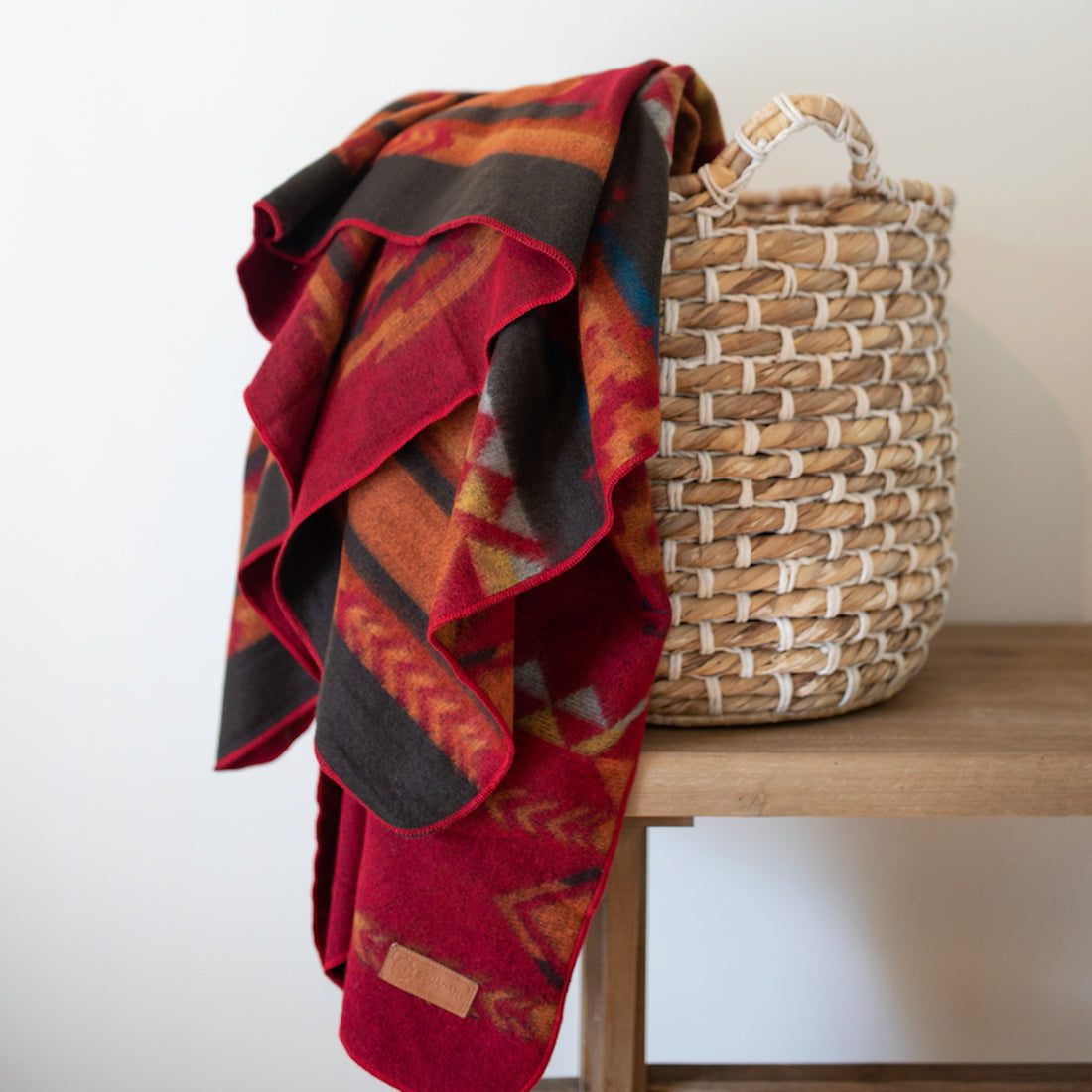
Rug making belongs to a very old human tradition. Historians trace floor coverings back thousands of years, and the surviving Pazyryk carpet shows that advanced pile weaving existed long before modern interior trends. The much later rise of synthetic fibers created a different kind of rug market, one driven by speed, volume, and short replacement cycles, as noted in this history of rugs.

An artisan weaving an intricate patterned fabric on a traditional loom beside a brown leather chair.

Permanence over commodity

You can feel the split in the market almost immediately.

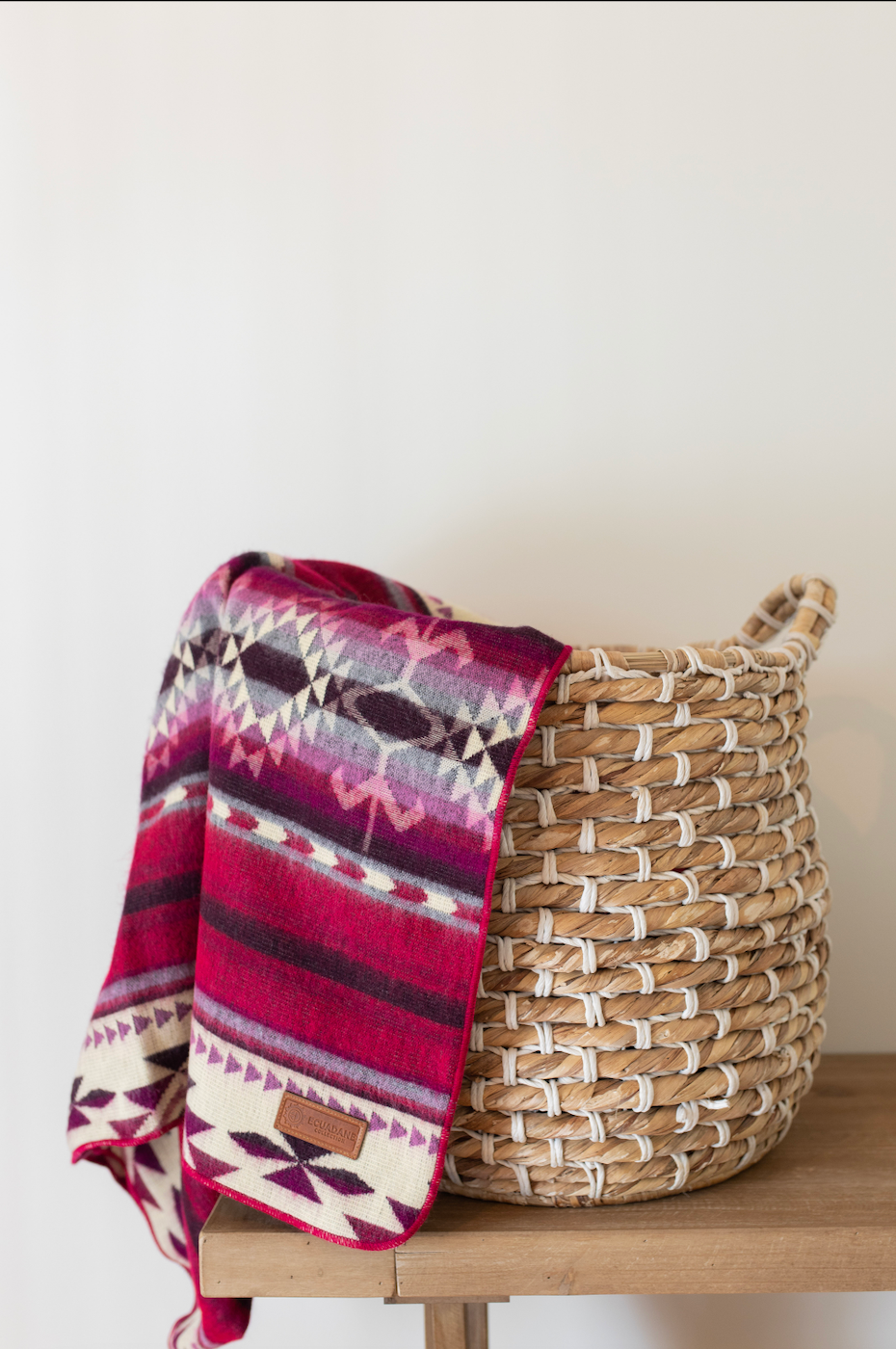
One rug is designed around a photograph. It leads with pattern, hides the fiber content in fine print, and depends on adhesives, thin backing, or low-grade synthetics to hit a price point. Another is built from the ground up. The wool, the tension of the weave, the clarity of the motif, and the finish all work together because the maker expects the piece to live in a real home for years.

That is the trade-off buyers should understand. Lower cost often buys instant visual impact and a shorter useful life. Better construction usually costs more up front, but it gives you cleaner aging, fewer structural problems, and a rug worth cleaning instead of replacing.

Practical rule: If a rug is sold on pattern alone, with no clear information about fiber, weave, backing, or who made it, you are buying a surface look, not a lasting textile.

I also believe the language around these rugs needs more care. Many shoppers searching for Aztec styles are responding to a wider family of Indigenous and regional geometric traditions across the Americas. If you enjoy that design language, it helps to learn the difference between trend labeling and textile heritage. Our guide to Southwest quilt patterns and geometric design traditions is a good place to start.

What lasting pieces have in common

The best rugs in this category share a few traits:

  • Clear visual structure. The pattern holds together because scale, contrast, and repetition were handled with discipline.
  • Materials that age gracefully. Natural fibers, especially good wool, usually wear with more character than low-cost synthetics that crush or shed their finish.
  • Construction that supports use. A rug should handle foot traffic, furniture weight, and cleaning without losing its shape or identity.
  • Respect for origin. Good design acknowledges where the visual language comes from instead of flattening every geometric motif into a generic “tribal” product.

If you want a quick comparison of how geometric styles are interpreted across the broader market, Rugs Of Beauty's patterned collection shows how widely this category can vary in mood and execution.

For me, that difference is the whole point. A rug should do more than fill floor space. It should carry skill, hold up to living, and deserve its place long after cheaper goods have curled at the edges or gone out with the next trend cycle.

The Soul of the Weave Unpacking the History of Geometric Patterns

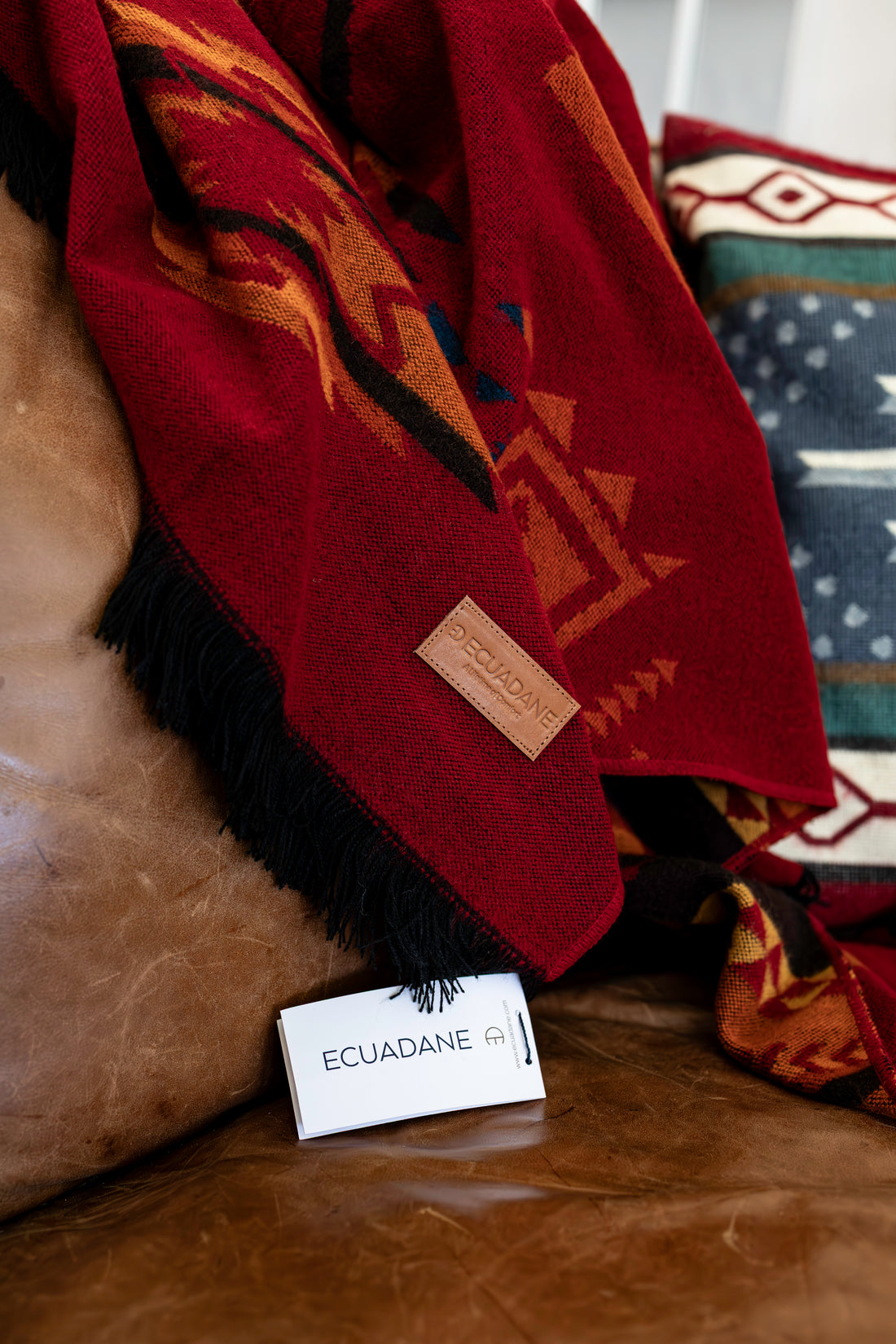
I grew up around Andean textiles where pattern was never random decoration. A diamond, a step, a band of contrast. Each choice carried memory, region, and the hand of the weaver. That is why I'm careful with the word “Aztec” now. In the rug trade, it often gets used as a catchall label for any bold geometric design with a Southwestern feel, even when the piece has little connection to Mexica or other Indigenous textile traditions.

Clear language matters because good buying starts with respect. “Aztec” works as a market term, but it does not describe one single historic rug type. It is more useful to ask where the visual language comes from, how the textile was made, and whether the seller is honest about inspiration versus origin.

In central Mexico, textiles held social and economic weight, not just decorative value. Fine cloth signaled status, circulated in trade, and was produced with skilled techniques such as backstrap weaving, using fibers like yucca, maguey, cotton, and wool, as noted in this overview of Aztec textiles.
An infographic titled The Soul of the Weave explaining the cultural origins and symbolism of indigenous geometric patterns.

What that history changes for a buyer

Once you understand that these motifs come from cultures where cloth carried meaning, the buying standard gets higher. The question shifts from simple visual preference to authorship, material honesty, and cultural accuracy.

I have no issue with contemporary interpretation. Every living design tradition evolves. The problem starts when mass-market selling flattens many distinct histories into one vague “tribal” or “Aztec” mood board, then asks the customer to accept the styling without asking who made it, what it is made from, or what tradition it is referencing.

A more disciplined buyer usually asks better questions:

What to ask Why it matters
Is this described as Aztec, Southwestern, tribal, or geometric? Those terms signal different levels of specificity, and the broader label is often the more honest one.
Does the seller explain fiber, weave, and place of production? Serious textile makers lead with construction and material facts, not trend language.
Is the design presented as heritage-based, artisan-made, or simply inspired by historic motifs? A respectful interpretation should say so plainly.

A rug can borrow a visual language responsibly. It should never borrow authority it has not earned.

Pattern without context has a short shelf life

Strong geometry has staying power because order reads clearly in a room. Stepped forms, diamonds, stripes, and directional bands create rhythm. But pattern alone does not make a piece meaningful, and it does not make it well made.

That distinction matters to me as a founder. Our Andean heritage taught us to see textiles as cultural work before we see them as product categories. So when I look at the broad retail use of “Aztec,” I ask whether the piece reflects real craftsmanship or just a temporary aesthetic shorthand. If you want a useful snapshot of how widely the market groups these looks, Rugs Of Beauty's patterned collection shows the range. For a closer look at related design language in home textiles, our article on Southwest quilt patterns and geometric design traditions gives more historical context.

Authenticity versus approximation

The best purchase is usually the one described with the most honesty. Sometimes that means buying an artisan textile with a clear regional lineage. Sometimes it means choosing a modern geometric rug that openly says it is inspired by older forms.

That difference sounds subtle, but it affects everything. It shapes how a buyer values the piece, how a maker is credited, and whether the rug is treated as an heirloom object or just another seasonal accessory.

A practical filter helps:

  • Choose authenticity if the seller explains maker, method, fiber, and origin with confidence.
  • Choose “Aztec-inspired” if the design is contemporary and the reference is interpretive.
  • Choose “geometric” or “Southwestern” if those labels describe the piece more accurately than a broad cultural shortcut.

Good rugs can be inspired by many traditions. Better rugs tell the truth about which tradition, whose hands, and what standards of craft brought them into the room.

From Loom to Living Room Materials and Craftsmanship That Endure

Once the historical romance wears off, quality comes down to structure. A geometric rug either keeps its definition under use, or it doesn't. There isn't much middle ground.

That's why I pay close attention to construction before I pay attention to trend. Aztec-inspired rugs rely on high-contrast geometric patterns, and those motifs are best rendered in flatwoven or low-pile constructions because the design stays legible and the surface resists crushing in high-traffic settings, as discussed in this article on Mexica versus Aztec terminology.

Close up of hands spinning raw wool fiber with a wooden drop spindle on a creative background.

Why low pile often wins

Some buyers assume low pile means less luxury. In reality, it often means more discipline. Deep plush surfaces can be beautiful, but they soften edges and blur motifs that depend on crisp contrast.

Here's the trade-off in plain terms:

  • Flatwoven or low-pile rugs preserve line work, sit cleanly under furniture, and tend to handle traffic with less visible distortion.
  • Soft cut-pile rugs can feel inviting at first touch, but the pattern can lose sharpness as the pile shifts and crushes.
  • Loose constructions may look relaxed in photos, yet they often age poorly in rooms people use.

Material quality is where the difference shows up later

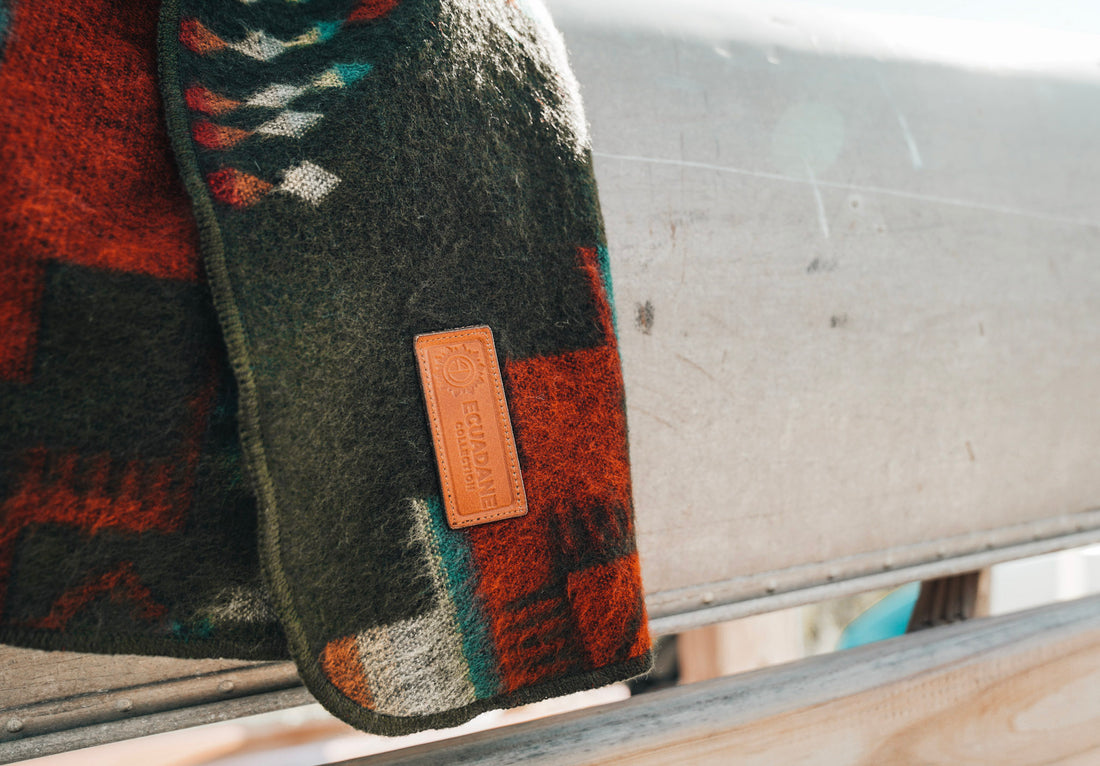
Mass production usually hides its compromises in places the buyer doesn't inspect on day one. The yarn may feel acceptable under showroom lighting. The weakness appears later, when the edge curls, the field pills, the backing shifts, or the motif loses contrast.

A well-made geometric rug needs balance across the whole system:

  1. A stable weave so the pattern doesn't wander.
  2. Strong fiber selection so the face doesn't collapse into fuzz.
  3. Color clarity so contrast remains intentional, not muddy.
  4. A backing suited to use so the rug behaves on the floor it's going to live on.

The wrong construction can make a strong design look tired long before the rug is technically worn out.

There's also a false economy in buying decorative impact without material integrity. Cheap synthetics can mimic a look quickly, but they often age like temporary decor. By contrast, heirloom-minded textiles are built with the expectation of use, cleaning, and continued relevance.

That philosophy also shapes how I think about artisan work more broadly. The making matters. The time matters. The human skill matters. If you want to understand what that looks like from the workshop side, our piece on the artisans behind Ecuadane's weaving tradition offers a closer view of what responsible craftsmanship asks from both maker and buyer.
What works and what doesn't

A quick comparison helps.

Works well Usually disappoints
Dense, balanced weave Loose, unstable face yarns
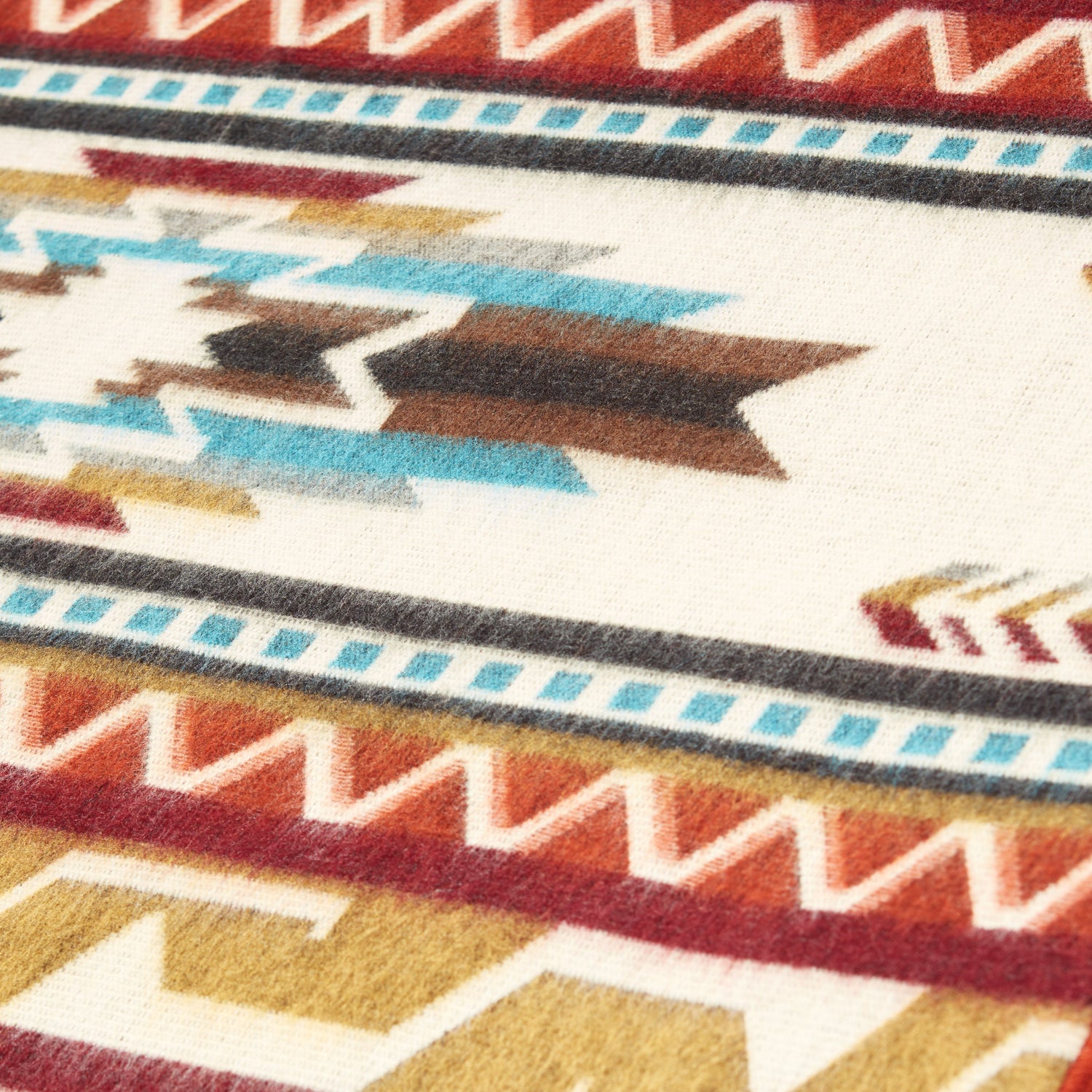
Clear motif edges Blurred or fuzzy pattern definition
Materials chosen for long wear Fibers chosen mainly for low cost
Construction matched to room use One-style-fits-all selling

Good rugs don't beg for attention. They subtly hold the room together, then keep doing it.

Choosing Your Anchor Styling an Aztec Area Rug for Any Space

A geometric rug this assertive shouldn't be treated like filler. It should act as the room's anchor. When buyers get that wrong, the room feels noisy. When they get it right, the rug gives everything else a reason to be there.

An infographic showing five ways to style an Aztec area rug in various home living spaces.

Let the rug lead the room

In a living room, I like these patterns best when the upholstery steps back. Clean-lined seating, natural wood, leather, blackened metal, and solid textiles give the geometry room to breathe. If every surface is competing, the rug stops feeling intentional.

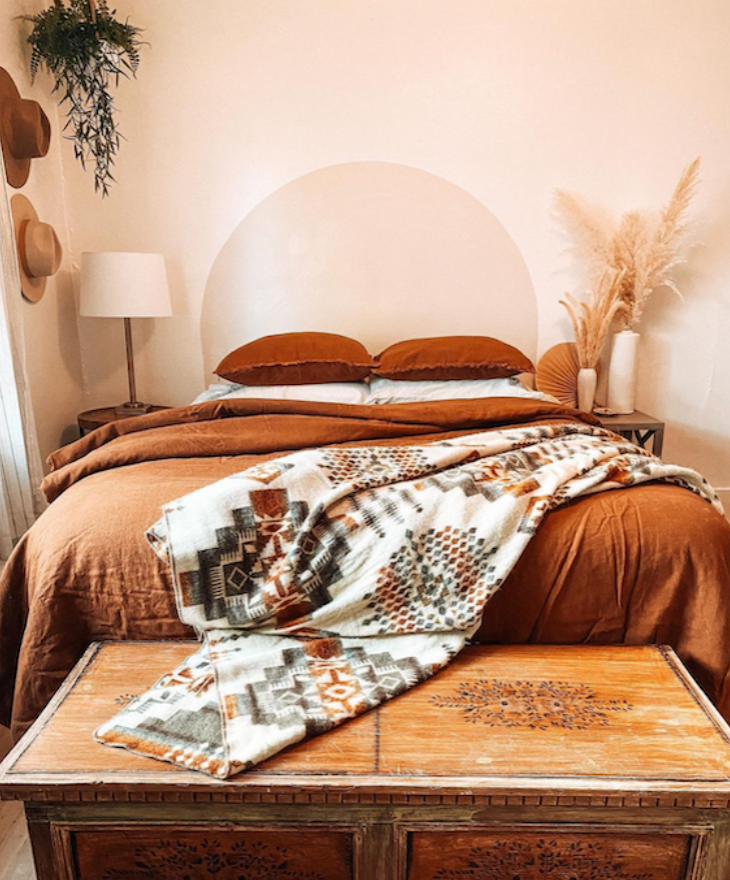
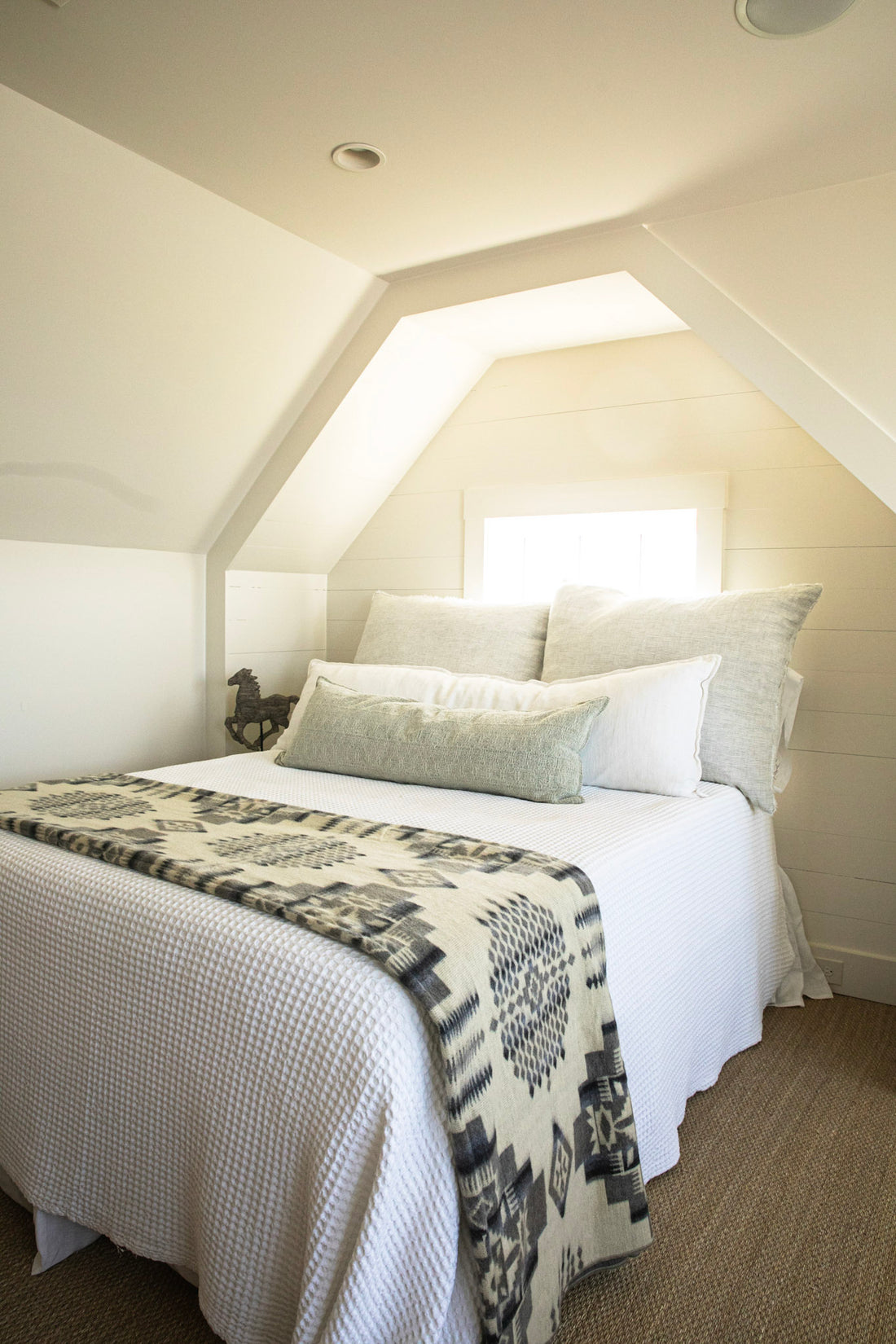
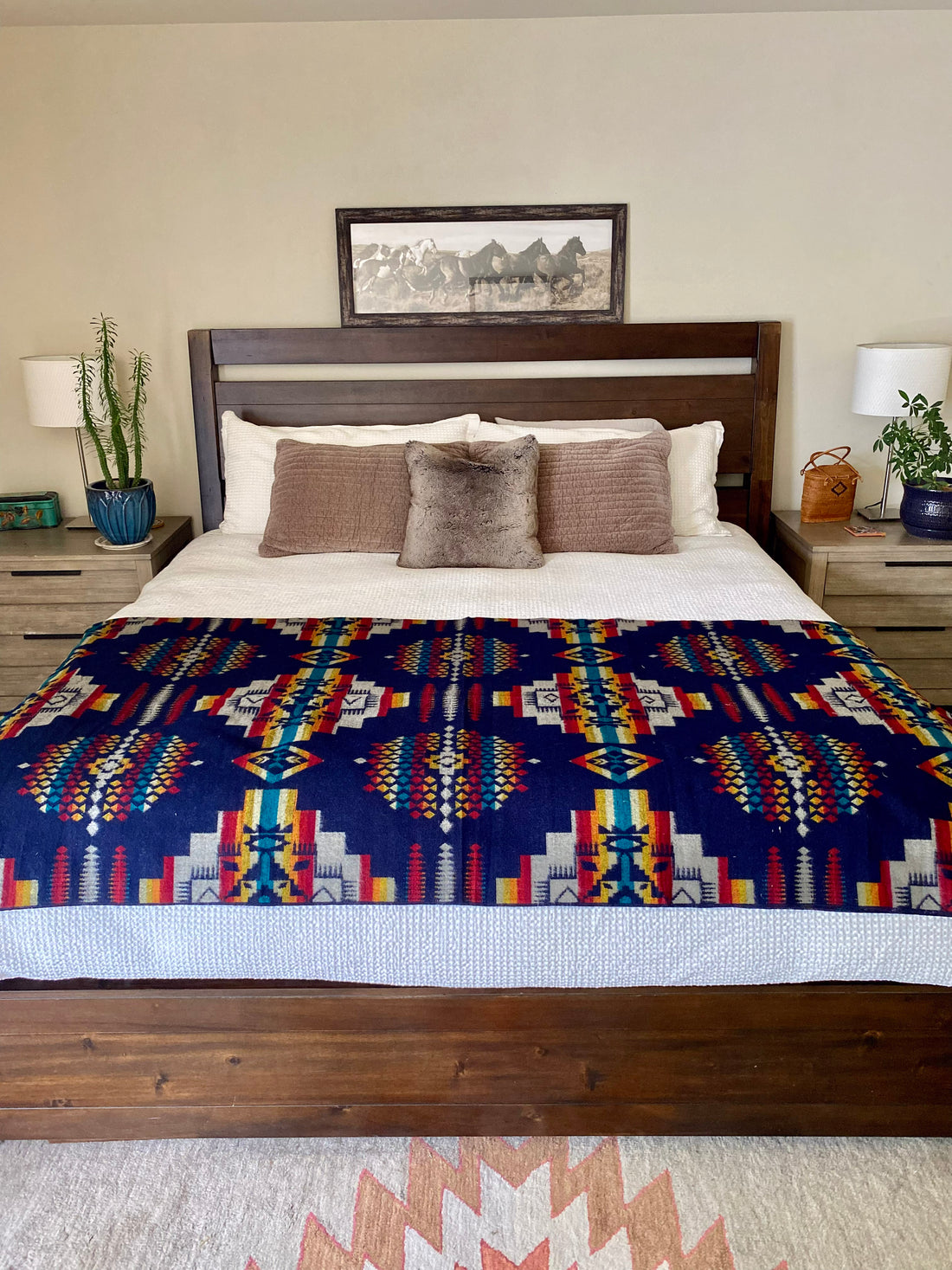
In a bedroom, the same visual language works differently. There, the rug should ground the bed and soften the architecture around it. Crisp geometric forms pair well with quieter bedding because they add order without demanding clutter.

For readers still comparing options across styles and budgets, it can help to browse quality area rugs just to train your eye on differences in scale, border treatment, and palette. Looking across categories makes it easier to notice when a bold motif feels composed versus when it feels generic.

Placement matters more than people think

A few room-specific rules keep these rugs from feeling adrift:

  • Living room. Front legs of key seating should engage the rug so the pattern reads as part of the furniture plan.
  • Bedroom. The rug should extend enough to provide a soft landing at the sides and foot of the bed.
  • Entryway. Durability matters most. Here, disciplined construction earns its keep.
  • Dining area. The rug needs enough footprint to keep chairs visually connected when pulled back.

A little visual guidance helps when planning placement:

Layering without chaos

Layering can work beautifully, but only if one textile plays the lead and the other plays support. A patterned rug over another busy surface usually turns into static. A better approach is to pair a strong geometric piece with solid upholstery, simple ceramics, and tactile accents that don't introduce another competing pattern family.

Designer's shortcut: If the rug has a strong stepped or diamond motif, reduce visual noise everywhere above knee height.

If you enjoy this design language and want to bring it into the rest of the room, our guide to using Southwestern-inspired patterns at home explores how to echo that spirit through layers instead of imitation. For softer accents, descriptive internal paths like a Southwestern collection or versatile throws can complete the room without overbuilding it.

The best result is a room with one strong textile story, not five partial ones. That's how a rug becomes a Living Room Asset instead of another object waiting for the next refresh.

A Legacy in Thread Custom Rugs for Institutional Identity

In commercial and institutional settings, decorative language alone isn't enough. A rug has to perform, represent, and endure. That changes the specification process immediately.

For luxury hospitality, universities, clubs, and commemorative programs, surface performance is the key technical variable. Low-pile woven rugs specified with dense, colorfast yarns trap less soil, clean faster, and maintain sharper motif definition under heavy traffic, preserving visual impact over the full service life, as summarized in this Britannica reference on Aztec-related design context.

Why institutions should care about weave, not just artwork

Organizations often begin with logo placement or color matching. Those matter, but they come second. If the surface can't carry the design cleanly through repeated use, the branding degrades with the rug.

That's why low-pile woven construction is such a strong fit for spaces like:

  • Hotel lobbies, where first impressions and maintenance discipline meet.
  • University interiors, where identity markers need to survive constant foot traffic.
  • Private clubs and member spaces, where tactile quality signals standards before anyone says a word.
  • Commemorative installations, where longevity is part of the message.

The right custom rug becomes an institutional artifact

I've always believed an organization should commission textiles the same way it commissions any lasting object. With care for symbolism, material honesty, and context. A custom rug shouldn't feel like enlarged merchandise. It should feel like a piece of institutional memory translated into thread.

That means asking practical questions early:

Institutional question Better answer
Will the motif stay crisp under use? Choose dense, low-pile woven construction
Can housekeeping maintain it efficiently? Specify for cleanability, not softness alone
Does the design fit the architecture? Build from emblem, palette, and setting together

There's also a stewardship dimension here. The best institutional textiles don't disappear into utility. They communicate seriousness. They tell visitors, students, alumni, guests, and donors that the organization invests in things worth keeping.

That's the same permanence principle I value in the home, translated to a public setting. The rug becomes part of the place's visual memory.

Caring for a Future Heirloom Your Guide to Maintenance

A well-made rug shouldn't make you nervous. It should invite use.

That's one of the biggest differences between heirloom-minded textiles and precious showroom pieces. The former are made to live in real rooms, under real feet, with real maintenance. If a rug can't handle ordinary life, it isn't much of a legacy object.

Daily care that preserves the surface

A few habits keep geometric rugs looking disciplined:

  • Vacuum gently and consistently so grit doesn't settle into the weave.
  • Rotate the rug periodically to even out wear patterns and light exposure.
  • Address spills quickly with a clean cloth and a calm hand instead of aggressive scrubbing.

If the rug arrives with some memory from shipping, patience usually helps. Let it relax flat, reverse-roll if needed, and give the structure time to settle before assuming there's a defect.

Luxury should still be functional

I prize craftsmanship, but I don't believe luxury should be fragile. That's why machine-washable construction is such an important modern standard when it's done well. It removes fear from ownership. It allows a beautiful piece to stay in family life instead of being treated like a museum object.

Buy the rug you'll actually live with, clean, and keep. That's the one with a future.

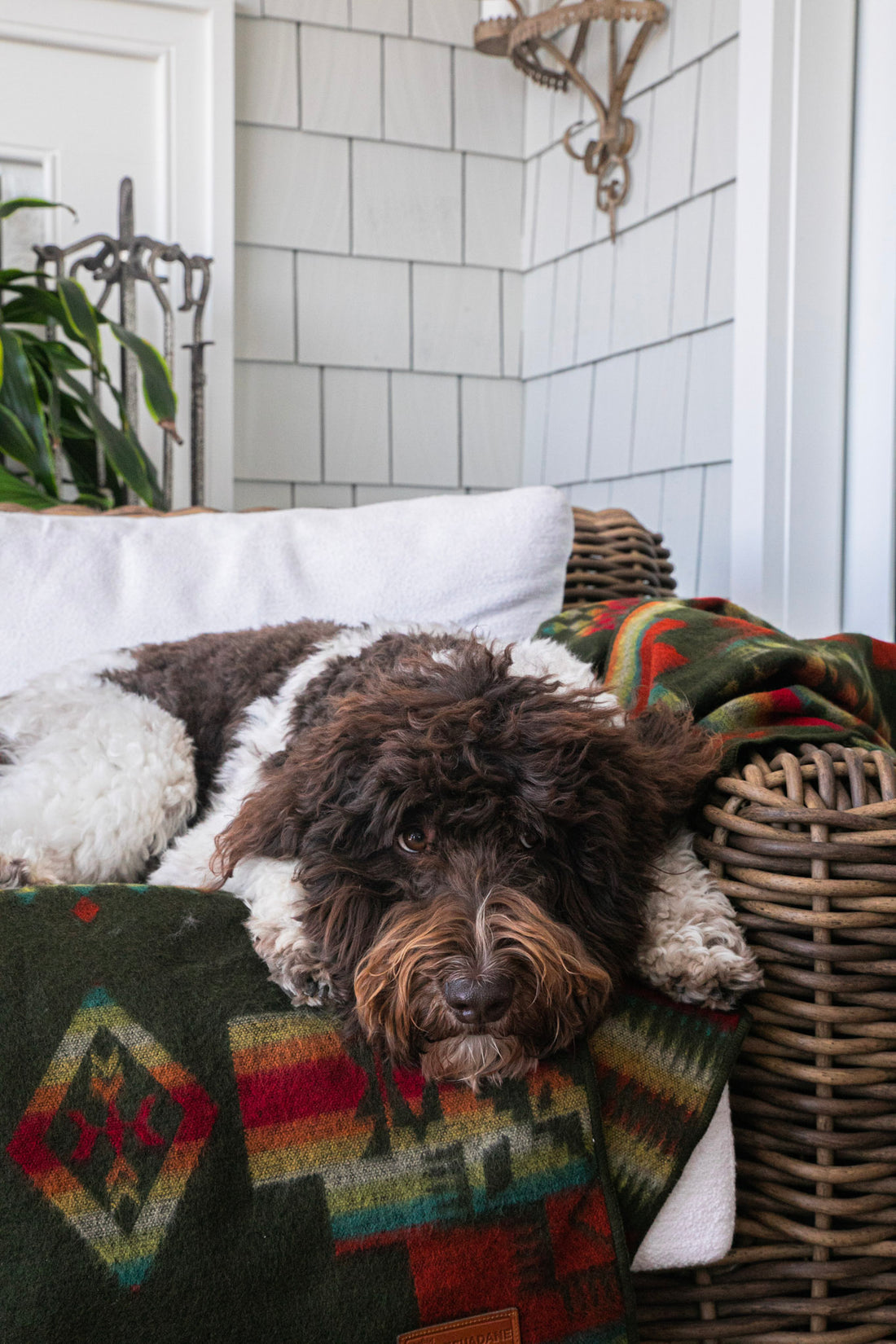
The best textiles become softer, more familiar, and more personal through use. They don't ask to be protected from life. They absorb life and remain worthy of the room.

FAQ

What makes Aztec area rugs different from generic geometric rugs

The main difference is context. “Aztec” is often used as a broad modern retail label, while buying that values heritage asks about provenance, construction, and whether the design is better described as Aztec-inspired, Southwestern, or purely geometric.

Are low-pile Aztec area rugs better for busy spaces

Usually, yes. Low-pile and flatwoven constructions tend to keep geometric motifs sharper and resist the crushing that can blur high-contrast designs in active rooms.

How can I tell if a rug is authentic or just styled to look authentic

Start with the product description. Look for transparency about maker, material, weave type, and cultural framing. If the listing only talks about trend, color, and vibe, it's probably selling styling first.

Do these rugs work in modern interiors

Absolutely. They work especially well when the surrounding furnishings are quieter. Strong geometric rugs pair best with simple upholstery, natural materials, and a restrained palette.

Are heirloom-quality rugs hard to maintain

They shouldn't be. The best ones are made for regular care, practical cleaning, and daily use, which is exactly what allows them to stay in a home for generations.


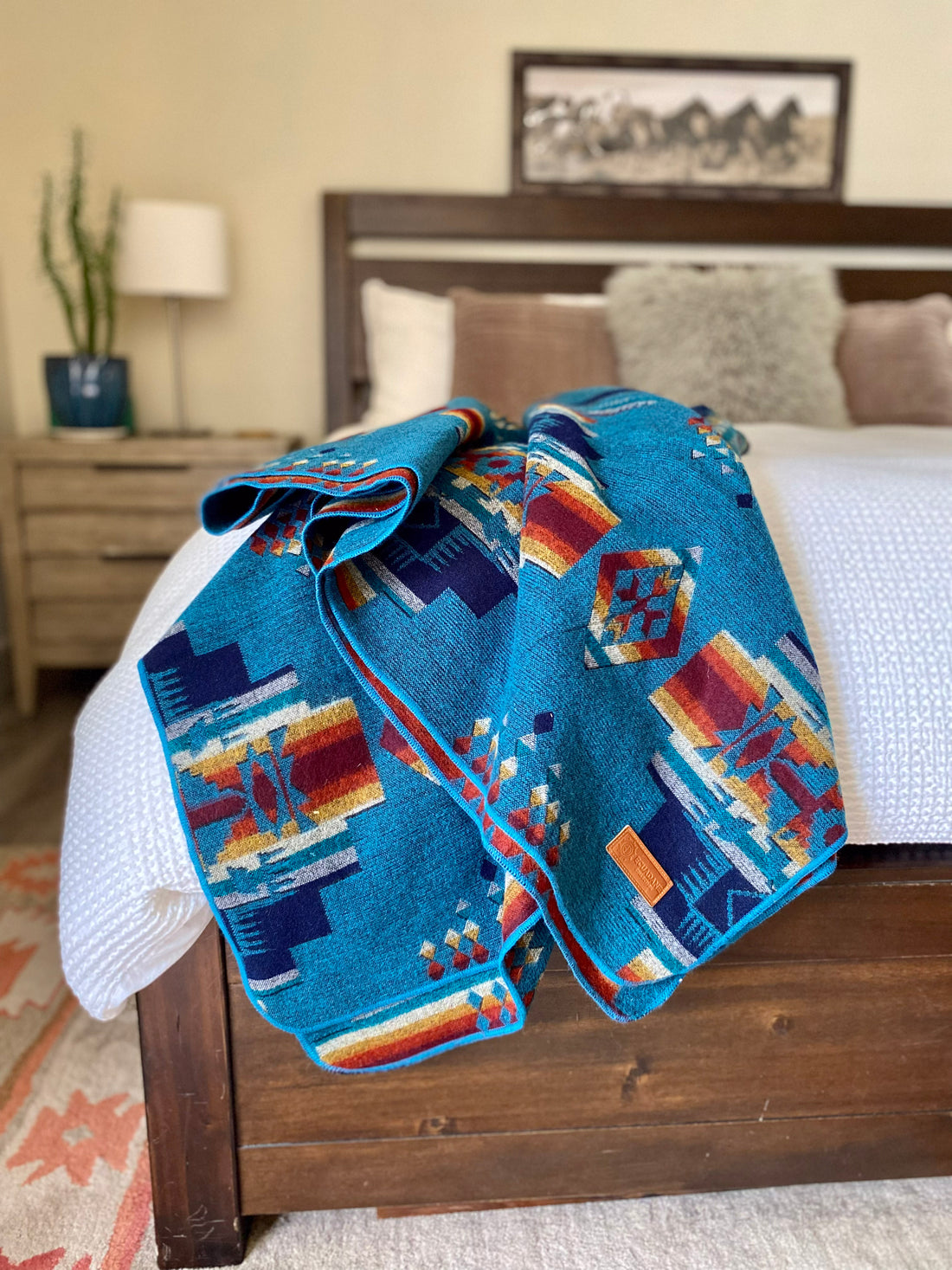
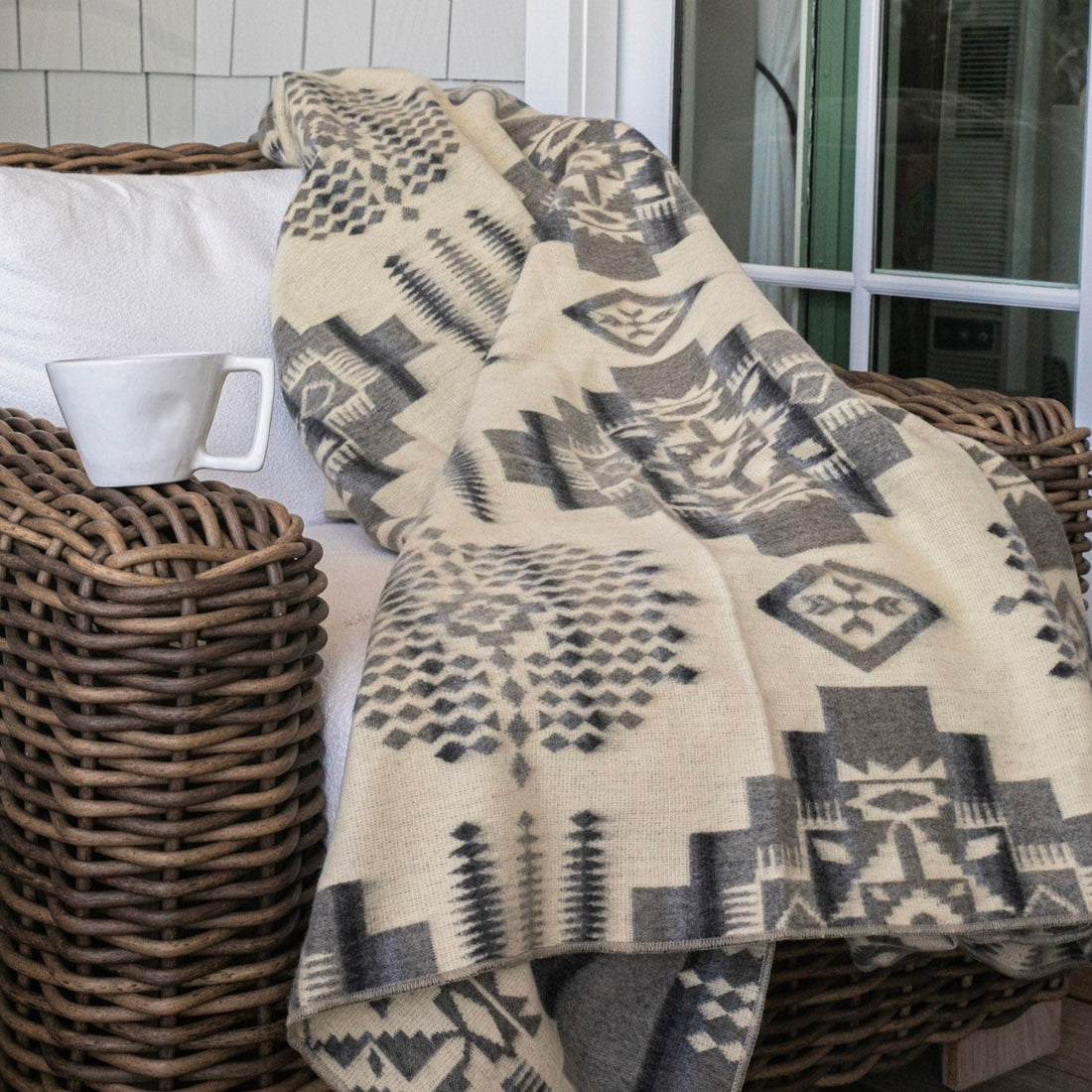
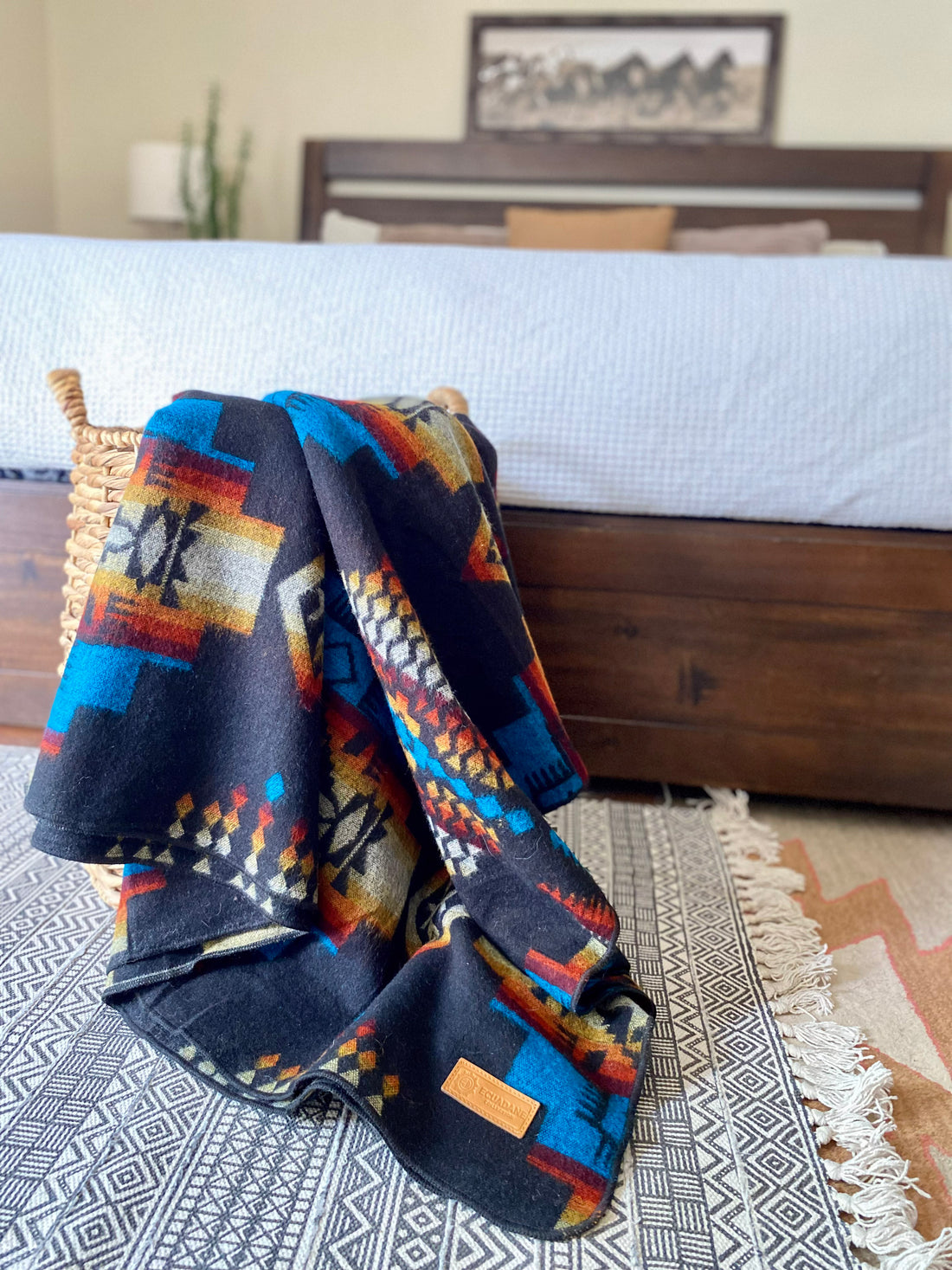
If you value textiles that are made to stay, not disappear into the cycle of disposable decor, explore Ecuadane. Our collection is built around heritage, functional luxury, and woven pieces meant to live in the home for generations.

Leave a comment

This site is protected by hCaptcha and the hCaptcha Privacy Policy and Terms of Service apply.